
We invest in assessments.
We gather feedback.
We encourage leaders to reflect on strengths, preferences and blind spots.
And yet, despite all this insight, organisations still find themselves asking the same question:
Why don’t people actually behave differently?
We gather feedback.
We encourage leaders to reflect on strengths, preferences and blind spots.
And yet, despite all this insight, organisations still find themselves asking the same question:
Why don’t people actually behave differently?
It’s a fair question — and an important one. Because while insight is essential, it is rarely enough on its own.
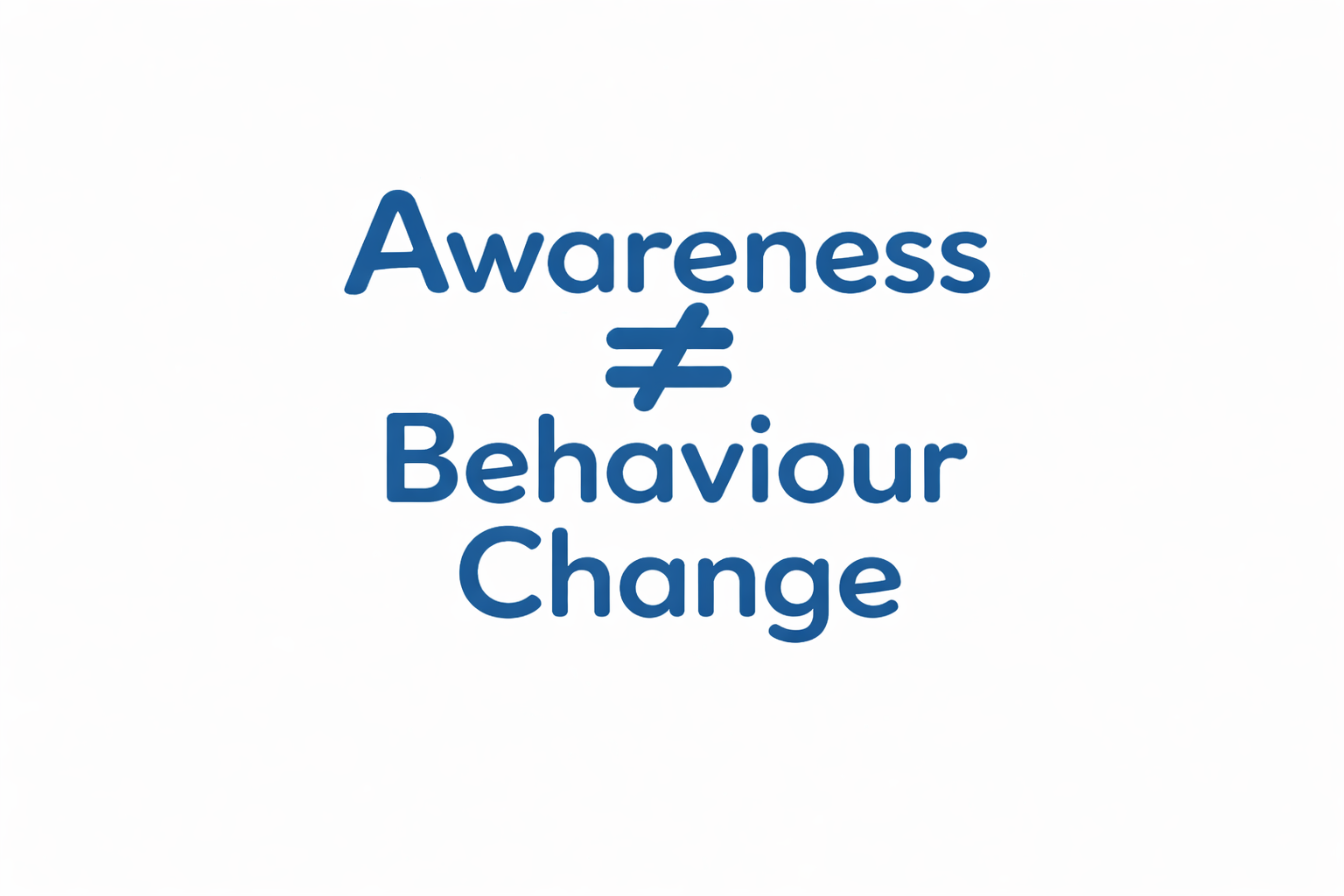
Awareness ≠ behaviour change
Insight helps people see themselves more clearly. It shines a light on patterns, tendencies and impact. But seeing something doesn’t automatically mean you can change it. Most leaders already know a great deal about themselves. They know:
- When they become impatient
- Where their confidence dips
- How pressure affects their decision-making
- What they value — and what frustrates them
The gap isn’t usually a lack of awareness.
It’s the leap from knowing to doing something different — especially when it matters most.
Why insight so often stops short
There are a few reasons insight alone rarely leads to sustained behaviour change.
First, insight is often delivered outside of context.
Feedback reports, assessments and workshops typically happen away from the real moments that shape leadership — difficult conversations, competing demands, uncertainty, pressure.
Second, insight tends to be static.
A report captures a snapshot in time, but leadership is dynamic. How someone shows up on a calm Tuesday morning is rarely how they show up in a high-stakes moment.
And third, insight can feel exposing.
Without the right support, it can leave people thinking “I know what I do — but I’m not sure how to shift it.”


Pressure is where insight is tested
Leadership behaviour isn’t defined by good intentions.
It’s defined by what people default to when the stakes are high.
Under pressure, leaders don’t rise to the level of their insight — they fall back on their patterns.
That’s why so many development efforts feel promising in theory but fragile in practice. The moment pressure hits; old habits reassert themselves.
This isn’t a failure of the individual.
It’s a limitation of development approaches that stop at awareness.
What actually helps insight turn into change
Lasting behaviour change requires something more than information.
It requires:
- Space to reflect, not just receive feedback
- Support to interpret insight, especially when it’s uncomfortable
- Time to practise, adjust and learn in real situations
- A focus on moments of pressure, not just ideal conditions
This is where coaching and supported development make the difference.
Coaching doesn’t replace insight — it activates it.
It helps people notice patterns as they’re happening, experiment with different responses, and make sense of what works for them in context.
Change sticks when leaders:
• Understand their patterns
• Recognise when those patterns are triggered
• Have practical ways to respond differently
• Feel supported while they’re doing so


From insight to impact
The most effective leadership development doesn’t ask people to become someone else.
It helps them:
- Use their strengths more deliberately
- Understand how pressure distorts those strengths
- Align behaviour with values, even when it’s difficult
- Build confidence through lived experience, not theory
A quieter, more sustainable approach to leadership development.
At LUMA, this belief sits at the heart of our work.
Insight matters — deeply.
But real growth happens when insight is translated into everyday leadership behaviour, over time, with support.
Not through one-off events.
Not through perfect self-knowledge.
But through thoughtful, evidence-based development that meets leaders where they are — including when things feel messy or uncertain.
Because leadership isn’t about knowing yourself in theory.
It’s about how you show up in practice.
And that’s where meaningful change begins.
At LUMA, this belief sits at the heart of our work.
Insight matters — deeply.
But real growth happens when insight is translated into everyday leadership behaviour, over time, with support.
Not through one-off events.
Not through perfect self-knowledge.
But through thoughtful, evidence-based development that meets leaders where they are — including when things feel messy or uncertain.
Because leadership isn’t about knowing yourself in theory.
It’s about how you show up in practice.
And that’s where meaningful change begins.